


We're contacted every day with questions about the Hadrian's Wall Path - from the history of the Wall itself to the practical details of planning your trip. Our team of specialists knows the route inside out, so we've pulled together the answers to the questions we hear most.
Got one we haven't covered? Get in touch, and we'll be happy to help.

Hadrian's Wall: History & Facts
What is Hadrian's Wall?
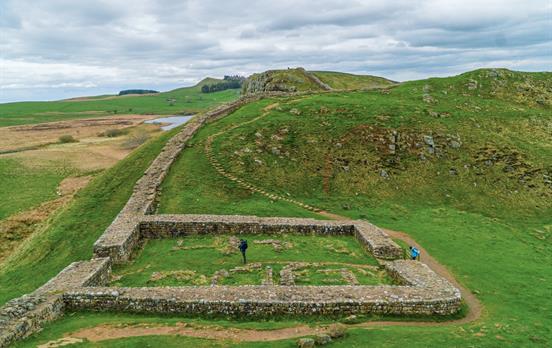
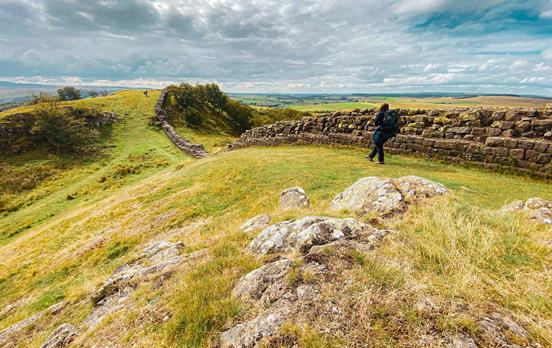
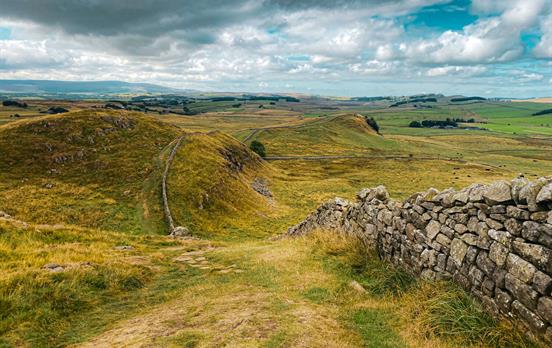
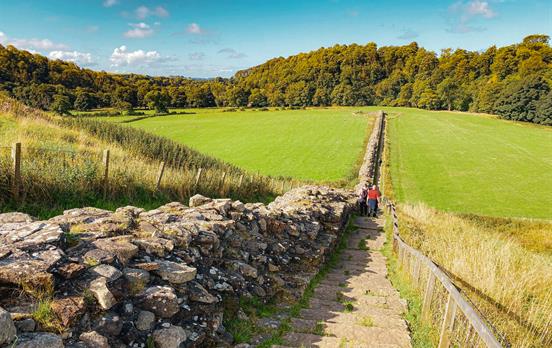
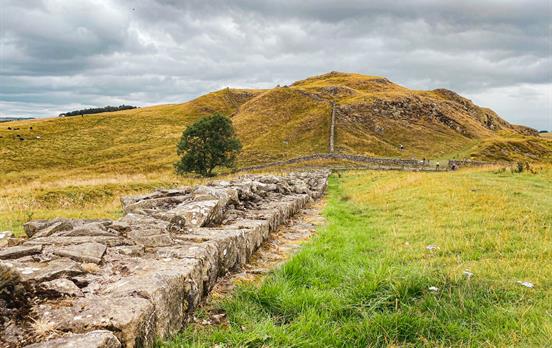
Hadrian's Wall is a Roman fortification that once stretched across northern England, marking the north-west frontier of the Roman Empire. It's the largest Roman archaeological feature in Britain and, today, a UNESCO World Heritage Site - and one of Britain's most rewarding long-distance walks.
Where is Hadrian's Wall?
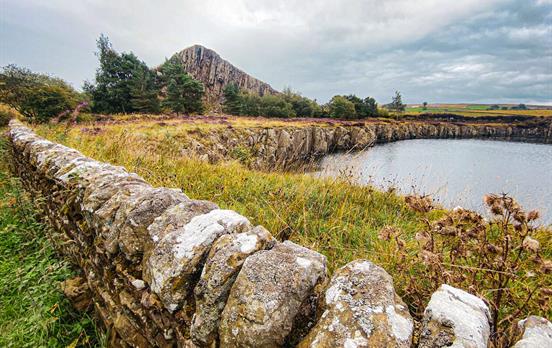
Hadrian's Wall runs coast to coast across northern England, cutting through Cumbria, Northumberland, and Tyne and Wear. It's often mistaken for the border between England and Scotland, but it actually sits well south of it, entirely within England.
Where does Hadrian's Wall start and end?
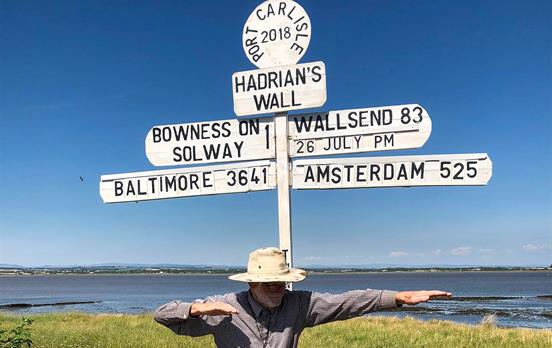
The Wall runs from Wallsend, on the eastern edge of Newcastle upon Tyne, to Bowness-on-Solway on the Cumbrian coast in the west. Most walkers follow the same direction the Romans built it in - east to west - though west to east is a popular choice too, especially if you'd rather have the prevailing wind at your back.

How long is Hadrian's Wall?
The Wall itself measures 73 miles (80 Roman miles, or around 117km). It's worth knowing that's different from the Hadrian's Wall Path, the walking trail that follows it - more on that below.
How tall was Hadrian's Wall?
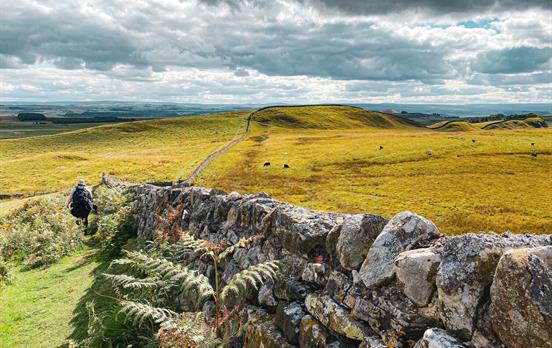
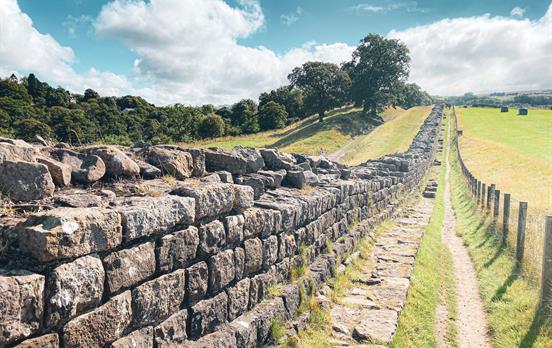
At its tallest, Hadrian's Wall stood around 15 feet high. Height varied along its length depending on terrain and materials, and no section survives to its full original height today, though some of the best-preserved stretches still give you a real sense of scale.
Who built Hadrian's Wall?
Hadrian's Wall was built by Roman soldiers, not slaves as is sometimes assumed. Three legions did the work - the Second, Sixth, and Twentieth - bringing architects, surveyors, masons and carpenters along with them. All in, around 15,000 men were involved in its construction.
When was Hadrian's Wall built?
Construction began in AD 122, on the orders of Emperor Hadrian, following his visit to Britain that same year.

How long did it take to build Hadrian's Wall?
It took at least six years to complete the main structure, with forts, milecastles and the Vallum earthwork added over the years that followed.
Why was Hadrian's Wall built?
Hadrian's Wall was built to mark and defend the north-west frontier of Roman Britain, and to give the empire firm control over who - and what - crossed it. The gates through the Wall are thought to have doubled up as customs posts, letting the Romans tax trade as well as monitor movement. It also sent a clear message about the reach of Roman power to everyone living on either side.

How old is Hadrian's Wall?
Hadrian's Wall is around 1,900 years old. Construction began nearly two millennia ago, in AD 122, and remarkably, long stretches still stand today.
Why is Hadrian's Wall important?
Hadrian's Wall is the best-preserved and most famous frontier of the entire Roman Empire, and it's been a UNESCO World Heritage Site since 1987. Beyond the scale of the engineering, it's what the Wall reveals that makes it special - excavations along the route, including the Vindolanda Tablets, have given historians an extraordinary window into everyday life on a Roman frontier. Archaeologists are still digging here, so there's always something new coming out of the ground. We recommend adding an extra night in Once Brewed. That gives you a relaxed morning or afternoon at Vindolanda, with time to explore the museum and the digs, without the need to watch the clock. Our specialists can add the night to your itinerary - get in touch to chat it through.
Can you walk Hadrian's Wall?
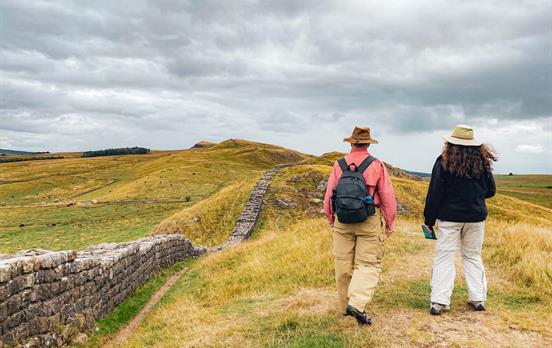
Yes - the Hadrian's Wall Path is an 84-mile National Trail that follows the line of the Wall from Wallsend to Bowness-on-Solway (it's slightly longer than the Wall itself, as the trail winds a little more). It's rated moderate in difficulty, with a natural grass surface for most of its length, and it's one of the most popular walking holidays Macs Adventure offers.

How long does it take to walk Hadrian's Wall?
Most walkers complete the full Hadrian's Wall Path in 5 to 9 days, depending on pace and how many rest days you build in. We offer itineraries ranging from a 5-day short break covering the east or west sections to a leisurely 10-day trip with shorter daily distances - so you can pick what suits you.
Can you cycle Hadrian's Wall?
Yes. Hadrian's Cycleway runs alongside the route of the Wall from Tynemouth to the Solway coast, taking in the same Roman forts and frontier scenery on two wheels rather than on foot. Have a look at our Hadrian's Cycleway trip if cycling is more your pace.

Planning Your Hadrian's Wall Walk
How far in advance do I need to book?
We suggest you book as soon as you know your plans, as Hadrian's Wall is extremely popular, especially over April, May and September.
How fit do I need to be?
We offer a range of itineraries so you can choose your preferred daily distance and hopefully find one that suits your level of fitness. If you don't currently have an active lifestyle, we suggest regular walking on hilly terrain, along with some cardiovascular exercise, for at least six months before your walk. Read more about getting fit to walk Hadrian's Wall Path.
How do the luggage transfers work?
Your luggage is transferred from one accommodation to the next while you're out on the trail. It'll be waiting for you at your next stay each day, so you can head to your room and dive straight into the shower. Just leave your bag in reception each morning, and it'll be collected while you're out walking and delivered ahead of your arrival. We ask you to limit your luggage to one bag of 15kg per person.

How do I get to the starting point of the walk?
- Option One: Two Trains - around 1hr. The Green Line runs directly from Newcastle Airport into the centre of Newcastle. Get off at Monument station and transfer to the Yellow Line, riding it for around 10 minutes until you reach Wallsend station. From there, it's a walk to Segedunum Roman Fort and Museum - the official start of the Hadrian's Wall Path.
- Option Two: Train and Bus - around 1hr. Take the Green Line from Newcastle Airport towards the centre of Newcastle, getting off at Monument station. Walk to Monument Market Street and catch the Blue Arrow 11 bus towards Whitley Bay. Get off at High Street East and walk to Segedunum Roman Fort and Museum.
There are variations on both routes - the Cobalt Clipper 309 bus will also get you to the Wallsend area - but these two are the most direct. For more detail, check our Travel Guide for Hadrian's Wall Path.
What can I do if I can't walk?
The AD122 - Hadrian's Wall's very own bus service - is a great option if you fancy a non-walking day or want to see other sights along the route. You can download a timetable to carry with you.
I don't want to walk 15 miles on my first day. What can I do?
If you arrive in Newcastle early, walk the first 5 miles that day to reduce your distance on day two. Start at Segedunum Roman Fort, where the walk officially begins, and perhaps spend some time in the museum before heading out along the trail. By the time you reach the Millennium Bridge, you'll have covered almost 5 miles, and you can either carry on or hop on the nearby bus or train to your hotel. The next morning, pick up from here for a shorter day ahead. You can speak to your Adventure Specialist about this.

Which direction should I walk?
Walking east to west - from Newcastle upon Tyne to Bowness-on-Solway, the same direction the Romans built the Wall - is the most popular choice, and you'll find it on our Hadrian's Wall Path trips. If you'd rather have the prevailing wind behind you, we also offer the full range of trips in reverse: west to east.
What personal equipment do I need?
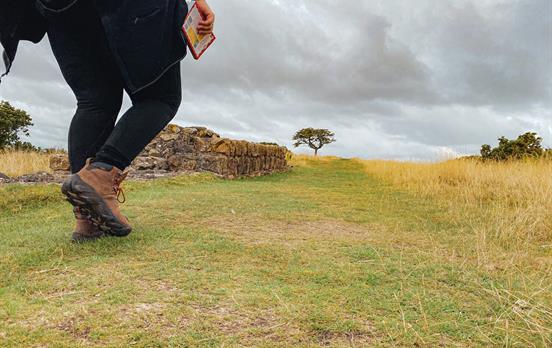
You'll need good walking shoes or boots (ideally waterproof), comfy walking clothes, a waterproof jacket and trousers, a daypack, and hats and gloves if you're walking in the shoulder season (March, April or October). For more detail, check out our blog post: What to pack for the Hadrian's Wall Path.

When is the best time of year to walk?
We offer the Hadrian's Wall Walk anytime between March and October. Because the Wall sits in northern England, the weather can be changeable, so it's worth packing for all conditions.
Can I take my dog?
No - unfortunately, we don't currently offer any walking itineraries that include your dog.
What happens if I can't walk a stage?
You can use public transport, the Hadrian's Wall bus, or local taxis to continue on to your next overnight stop.

What are the best historical sites along the route?
All of these are marked as points of interest on the Macs Adventure app:
- Segedunum Roman Fort and Museum - at the eastern end, explore the reconstructed fort, baths, and a fascinating museum.
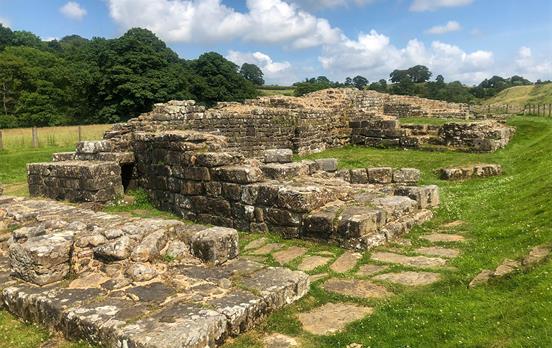
- Housesteads Roman Fort - one of the best-preserved forts on the Wall, with walls, barracks, and commanding views over the Northumberland countryside.
- Vindolanda - famous for the Vindolanda Tablets, offering incredible insight into everyday Roman life on the frontier.
- Chesters Roman Fort - known for its well-preserved baths and riverside setting on the River Tyne.
- Birdoswald Roman Fort - a key fort with impressive remains and a small museum, roughly midway along the Wall.
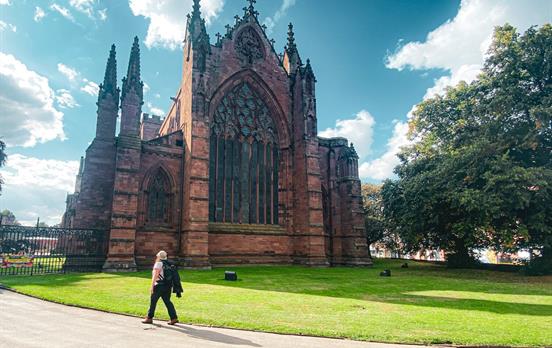
- Carlisle Castle - slightly off the main trail, this Norman castle sits on Roman foundations and is well worth the detour for history enthusiasts.

Is there a pass for visiting the Roman sites along Hadrian's Wall?
If you're visiting from outside the UK, there's a good one. The English Heritage Overseas Visitor Pass gives you unlimited access to English Heritage sites for 9 or 16 consecutive days. Several of the best-known sites along the Wall, including Housesteads, Chesters and Birdoswald, are cared for by English Heritage, so the pass can save you a bit of money as you work your way along the route.
A couple of things to know:
- The pass is only for overseas residents, so don't forget to bring proof of residency when you collect it.
- Not every site on the Wall is covered. Vindolanda, for example, is run separately, so you'll need to buy entry there on top.
- Prices and the list of included sites change each year, so check the English Heritage website before you buy.
Ready to walk in the footsteps of Roman legionaries? Browse our Hadrian's Wall Path trips or get in touch with our team for advice.



















 Australia
 New Zealand
 South Africa
 European Union
