







Discover Picos de Europa
-
Best Time to Go Walking in the Picos de Europa
May & June
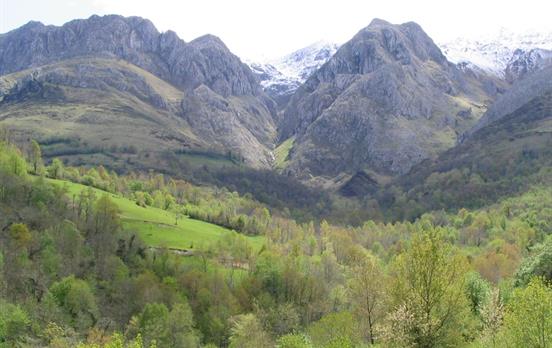
Spring is one of the finest times to walk in the Picos. The meadows are flowering, the light is long, and the trails are quiet. Some high-level routes may still carry snow in early May - worth checking before you go.July & August
The warmest and busiest months. The Cares Gorge in particular attracts large numbers of day-trippers in high summer. Temperatures in the valleys can reach the mid-to-high 20s°C. If you prefer more solitude, aim for early morning starts on the popular routes.September & October
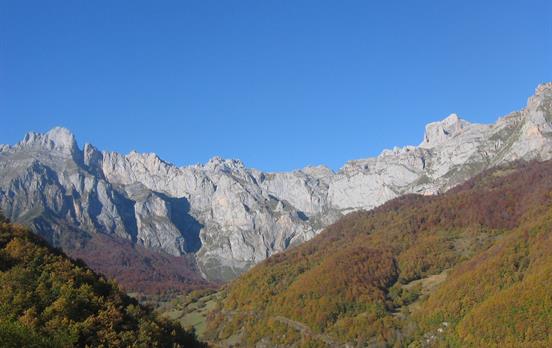
Our personal favourite window. Crowds have thinned, the air is crisp, and the autumn colours on the lower slopes are exceptional. September is particularly good - warm enough for comfortable walking, cool enough to keep the pace up.![Best Time to Go Walking in the Picos de Europa]()
-
Frequently Asked Questions
How do I get to the Picos de Europa from the UK?
The nearest airports are Santander (approx. 90 minutes by road) and Oviedo/Asturias (approx. 60 minutes). Direct flights from the UK operate to both - Santander in particular is well-served from several UK regional airports.Do I need to speak Spanish?
It helps, but it's not essential. The villages in and around the Picos are used to walkers, including international visitors. A few phrases go a long way, and most accommodation owners in the area will do their best to communicate. We include useful local information in your route pack.What kind of accommodation will I stay in?
We hand-pick all our accommodation on these routes - typically small family-run hotels, traditional guesthouses (casas rurales) and occasionally comfortable B&Bs. We look for places with local character, good food and a comfortable bed. Not luxury - but genuinely good.Is luggage transfer included?
Yes. Luggage transfers are arranged between each overnight stop as standard on our Picos de Europa walking holidays. You carry only a day pack - we take care of the rest.How fit do I need to be?
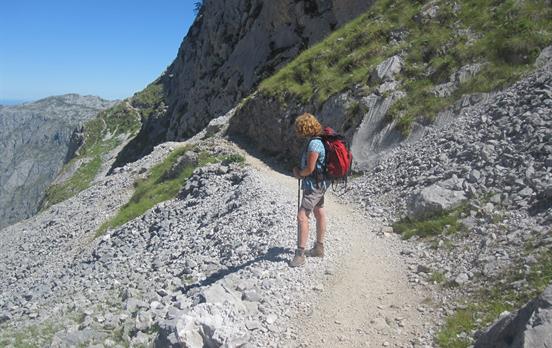
Good fitness is required. Our Picos routes involve 6 - 8 hours of walking per day over consecutive days, on uneven mountain terrain. Previous multi-day walking experience is recommended.![Frequently Asked Questions]()
-
Picos de Europa vs the Pyrenees: Which Should You Walk?
Experienced walkers looking for something different
If you've done the Camino de Santiago and want a wilder, more remote walking experience, the Picos de Europa is a natural next step. These are real mountain walks - rewarding, scenic, and genuinely challenging in places.Couples & partners
A Picos de Europa walking holiday makes a genuinely memorable trip for two. The combination of dramatic mountain scenery, excellent local food and wine, and comfortable evening accommodation is hard to beat.Active over-50s
Our walkers on the Picos routes tend to be experienced and looking for a challenge with comfort at the end of the day. The walking is serious - but it's not extreme. Good fitness and previous multi-day walking experience is recommended.Small groups (up to 8 people)
Travelling with friends? Our self-guided format works perfectly for small groups. You walk together, stay together, and set your own pace - no compromise needed.![Picos de Europa vs the Pyrenees: Which Should You Walk?]()
-
About the Picos de Europa National Park
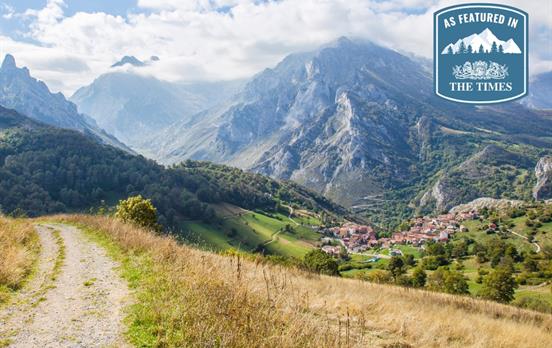
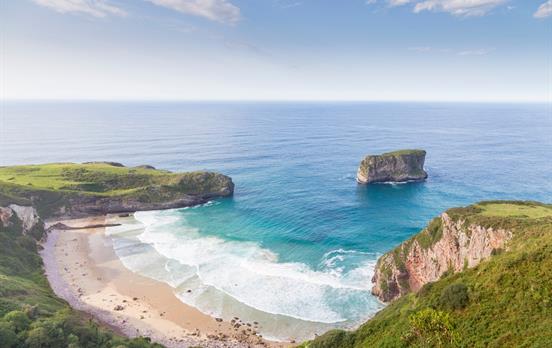
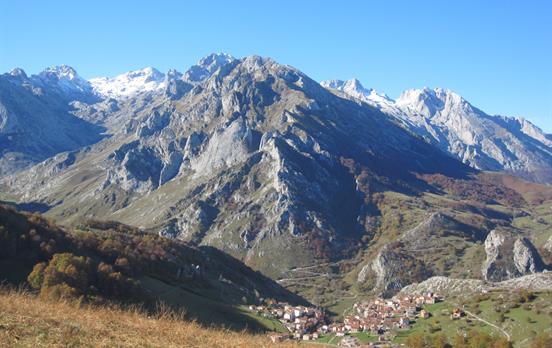
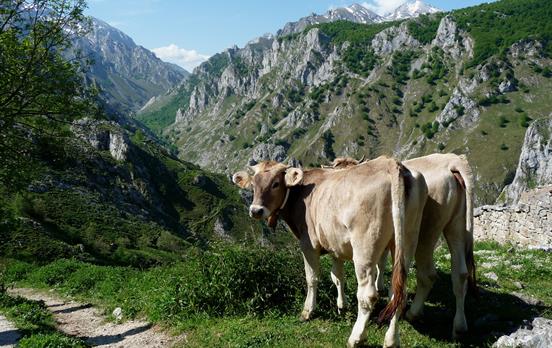
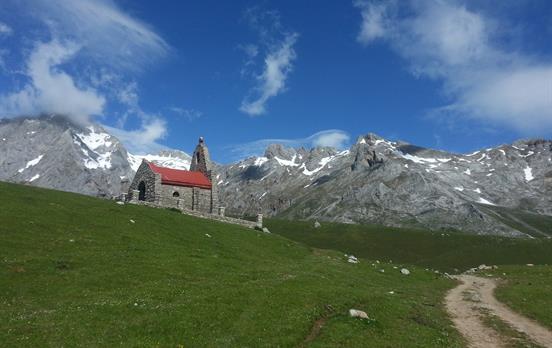
The Picos de Europa National Park covers roughly 647 km² across three Spanish regions - Asturias, Cantabria and Castile and León. It was Spain's first national park, designated in 1918, and sits just 15km from the Cantabrian coast - which makes the contrast between jagged high peaks and lush green valleys all the more dramatic.
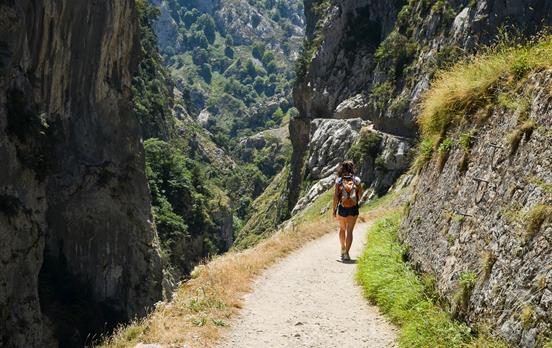
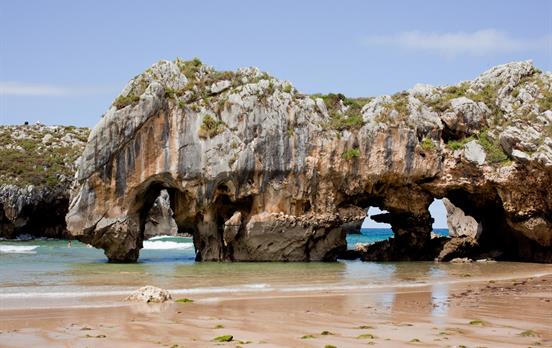
The park is split into three massifs: the Western (or Cornión), the Central (the largest), and the Eastern (or Andara). The Central Massif contains the highest peak, Torre de Cerredo, at 2,650m. Between these massifs run deep limestone gorges, carved over millennia by glacial meltwater — including the Cares Gorge, the single most famous walk in the national park.
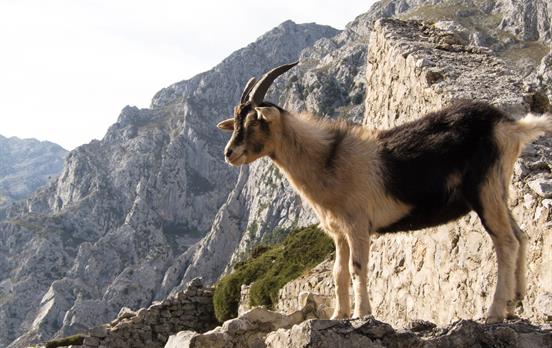
Wildlife here is exceptional. Golden eagles and griffon vultures ride the thermals above the limestone crags. Chamois are a common sight on the higher ridges. Brown bears and wolves live in the park, though sightings are rare.
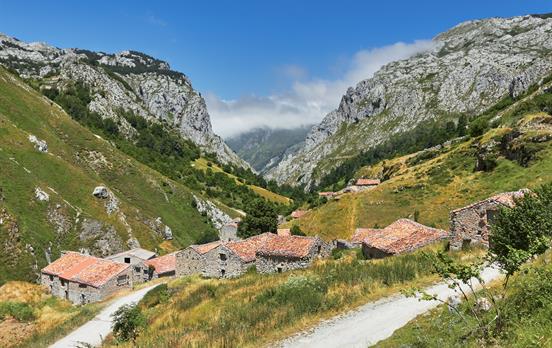
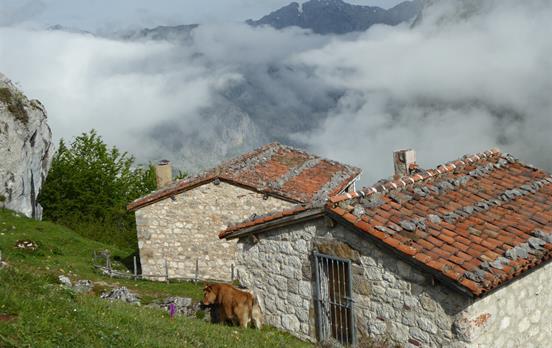
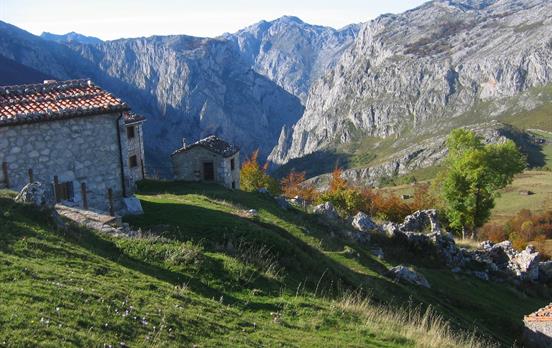
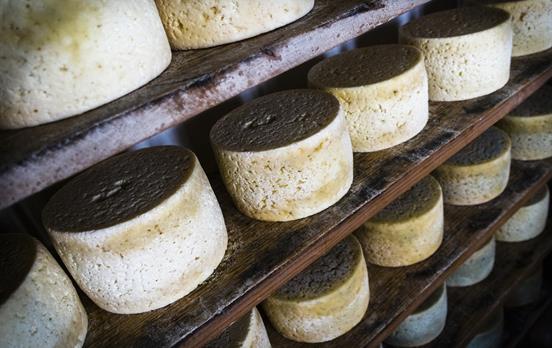
The villages in and around the park are deeply traditional - Arenas de Cabrales is famous for its sharp blue cheese, Cabrales, which is aged in the limestone caves of the mountains above. It's one of Spain's most distinctive cheeses and well worth seeking out.
![About the Picos de Europa National Park]()




 Australia
 New Zealand
 South Africa
 European Union